
Navigating Evolving Market Dynamics With Foresight: A Call to Action for Smarter Credit Decisions

By Marie Claire Lim Moore, Chief Executive Officer, TransUnion Hong Kong
I’m thrilled to introduce the inaugural edition of TransUnion® Pulse – Hong Kong Edition, our new quarterly newsletter dedicated to exploring the Hong Kong’s shifting credit landscape.
Having entered the second half of 2025, I’m pleased to expand our insights portfolio — alongside our established Industry Point of View Reports — with this timely publication. TransUnion Pulse is designed to help us stay ahead of change, anticipate emerging risks and uncover new opportunities in a dynamic market.
Early indicators, such as shifting risk scores and changing consumer behaviours, are beginning to emerge in lagging metrics like early delinquency in recent vintages and rising bankruptcy rates. While still developing, these trends are significant and merit close attention.
At the same time, portfolio strength remains anchored in older acquisitions, with prime and super prime segments still comprising 90% of retail credit. This stability offers room to pursue profitable growth within existing portfolios, even as new originations show elevated risk.
The first edition of TU Pulse provides a timely lens into these dynamics — not just a snapshot but a strategic tool to anticipate, adapt and align.
Elevated risk indicators in recent loan originations
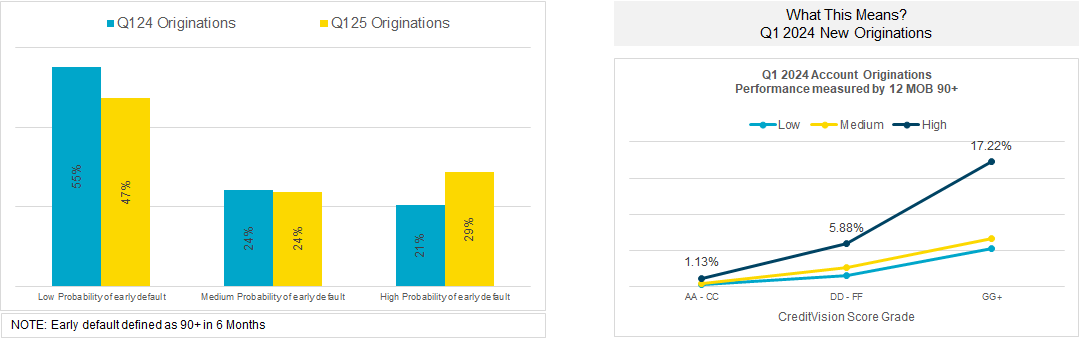
Q1 2025 originations revealed a growing share of newly approved accounts with high early default and bankruptcy risk, signaling increased volatility in borrower profiles and a potential need to reassess risk and origination strategies.
- Lead indicators (particularly scores designed to assess early default and bankruptcy risk) showed a rising share of approvals going to consumers with increasingly volatile financial behaviour, offering a forward-looking perspective on potential credit deterioration and insights into emerging vulnerabilities.
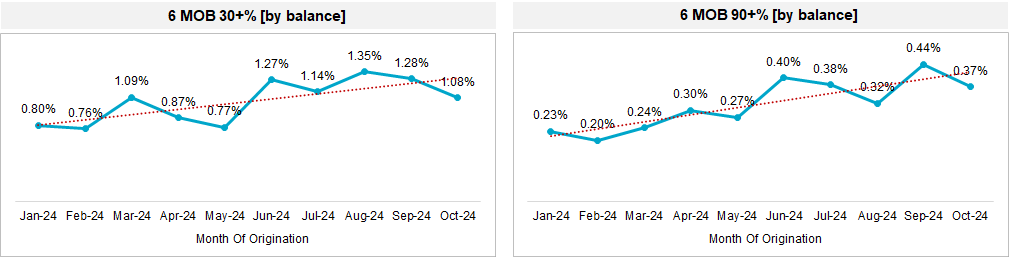
- Lagging indicators (particularly performance segmented by acquisition vintage) clearly reflect credit deterioration, underscoring the need to address vulnerabilities at the point of onboarding to better prevent risk from entering the portfolio.
- While these insights reflect broad market trends, it’s essential to recognise the distinct dynamics across lenders and credit types. Digital banks, for example, exhibited markedly different patterns compared to traditional banks and money lenders. This highlights the need for granular analysis of consumer behaviour to develop risk strategies tailored to each institution’s operating model and customer base.
Case in point:
Cross-lender, credit-seeking behaviour is on the rise, with more individuals applying to multiple institutions within short timeframes. This may indicate emerging credit stress or active rate-shopping behaviour.
Such behavioural patterns directly shape the risk appetite of different lender types, influencing their credit policies and customer segmentation. For example, Bank A may adopt a conservative stance — approving only applicants with a bureau score grade of AA to CC and zero credit inquiries in the past six months. In contrast, Bank B might be more flexible, accepting applicants with up to two inquiries or even those in the DD to FF score range, provided they have no more than one inquiry in the same period.
Portfolio resilience holds steady — for now
Despite emerging risk signals, the overall retail portfolio remained resilient — driven by strong performance from legacy accounts and the continued dominance of prime and super prime segments which account for 90% of retained credit. While certain pockets within the revolving loan portfolio showed signs of stress, their impact remains limited given the portfolio size in comparison to other portfolios.
While this resilience is encouraging, it must not lead to complacency. The opportunity lies in tightening front-end risk controls, refining score-based decisioning and enhancing onboarding filters to prevent risk from entering the system. At the same time, a balanced risk strategy should focus on identifying low-risk cohorts within existing portfolios to drive loyalty and unlock growth.
The questions we must ask are:
- Are lenders actively leveraging these lead indicators to take timely action at the point of origination — and within their live portfolios?
- Continuing with the insight of increasing cross-lender, credit-seeking behaviour: Are consumers turning elsewhere because they cannot access credit when they need it? This trend may signal a gap in meeting consumer needs — one that could be addressed through smarter, more responsive credit strategies that maintain risk quality while improving access.
More on this in edition 2 of the TransUnion Pulse.
Let us continue to lead with data, act with agility, and build a credit ecosystem that is both inclusive and resilient.
Source: TransUnion Credit Information Services consumer credit database


Business Contact Us
We're sorry, your request failed. Please try again in a little while.